
Design-Forward Floating Stair Treads in Palo Alto
When someone is shopping for a floating stair case, one element is immediately obvious to us about that client: looks matter. Going beyond the basic layout and positioning of a new staircase, the process should be fun and visually stimulating given the seemingly endless combination of materials and colors that can be pieced together for a new modern stair build. Reach out and let us walk you through some of the variables that can boost the look of a home in Palo Alto or an office in San Jose because custom stairs can be a valuable add-on to any property.
Wooden treads remain one of the most popular choices for floating stair designs, offering natural warmth, rich grain patterns, and a timeless look that complements both modern and traditional interiors. High-quality hardwoods like oak, maple, and walnut can be stained or finished to match your aesthetic while providing a visually enticing centerpiece for your custom staircase. In addition to wood, materials like stone, concrete, glass, tile, and steel offer exciting alternatives that allow you to make your floating stair project unique — from glass treads that enhance light flow to stone or concrete that adds texture and architectural impact. Whether you’re renovating a home or adding a signature staircase to a commercial space, exploring these options with an experienced contractor ensures a staircase that’s both beautiful and built to last.
Palo Alto: A Quiet Power Center in Silicon Valley
Palo Alto may not look like a tech capital, but it has been a city of ideas that helped shape Silicon Valley. Nestled in the northwestern part of Santa Clara County, near Mountain View, Palo Alto and its identity are closely linked to Stanford University. The university pushed engineering and applied sciences as tools for solving real-world problems, and this philosophy eventually spilled beyond the campus and into the city.
In the 1930s, one of the most influential moments in tech history happened in Palo Alto. Stanford graduates Bill Hewlett and Dave Packard built electronic equipment in a small garage in Palo Alto, and it was later called The HP Garage and the symbol of Silicon Valley. Xerox PARC was also founded in Palo Alto in the 1970s, helping the development of technologies like the computer mouse, ethernet networking, and early laser printing. Taken together, these moments show that Palo Alto is a city where groundbreaking ideas could emerge and gain momentum.
Living and Working in Palo Alto Today
One of the many ways Palo Alto has retained its identity as a city of ideas is by restricting the height of its buildings. For many decades, the city kept its buildings relatively low on purpose (no more than 50 feet) to make sure it remains livable. The city gives much importance to walkable, tree-lined streets and views of the Santa Cruz Mountains, and tall buildings would disrupt the sightlines and erode the area’s quiet character. Even the development of Stanford Research Park followed the height limits, and is now home to low-rise office and lab buildings, designed to blend with the surrounding landscape.
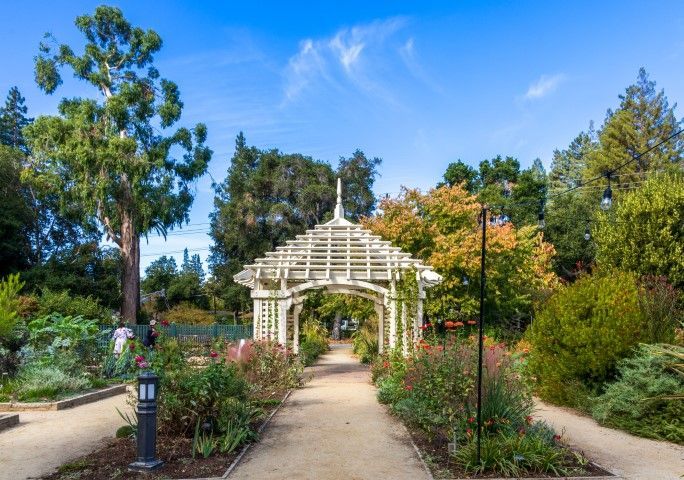
Visiting the most coveted residential areas in Palo Alto will give you a clearer picture of how calm and deliberate the atmosphere is in this side of Silicon Valley. Old Palo Alto is a prestigious neighborhood known for large-lot homes and custom-built estates. It’s the quiet contrast to the vibrant energy of the nearby Downtown Palo Alto along University Avenue, filled with a mix of boutique shops, restaurants, cafés, and bookstores.
Another charming residential area in Palo Alto is
Professorville. This neighborhood was named for Stanford professors who originally built many of the historic homes here. Because of its academic roots, Professorville has also hosted informal gatherings of scientists, scholars, and innovators. This is where you can feel the legacy of Palo Alto’s intellectual culture.
Of course, life in Palo Alto isn’t all about academics. Outdoor activities are also a routine part of life, thanks to the abundance of green spaces like the Rinconada Park. This family recreation hub is a 19-acre park with sports facilities, playgrounds, walking paths, and a library. The Rinconada Library is near Palo Alto Art Center, a community-focused space where you can learn, create, and experiment with art. The art center attracts around 150,000 people every year through its wide range of programs.
Meanwhile, the 21-acre
Mitchell Park, designed by landscape architect Robert Royston, is a prime example of a post-war park design. Functional zoning was used to separate areas for different uses. Its sports facilities include tennis and basketball courts and fields for soccer. It also features a library and a community center that hosts local events and programs for all ages.
Unlike large urban centers, Palo Alto’s business landscape blends with neighborhoods and local amenities. Tech companies are clustered near the Stanford Research Park, El Camino Real, and University Avenue, while Lucile Packard Children’s Hospital is situated within the Stanford University Campus, offering career opportunities aligned with research and healthcare.
Palo Alto is a city where innovation and community integrate seamlessly. At Creekside Metal Handrails, we support this balance of curiosity and modern living by helping shape spaces where work and life happen. We proudly offer metal fabrication services that contribute to safe and inviting commercial and residential settings in Palo Alto.